http://www.moneysense.ca/invest/where-to-invest-10000-3/
Once you have a larger portfolio, you may also start to consider buying individual stocks. It’s a good idea to start with a core balanced portfolio like the one I just discussed and use only a relatively small amount of money to buy stocks. New stock pickers might aim to put 5% to 10% of their overall portfolio into stocks. If you do, you should lighten up on your stock ETFs by the same amount to maintain your asset allocation.
When it comes to picking stocks, I recommend taking a long-term approach, avoiding unnecessary trading, and keeping your costs low. By doing so, you might actually beat index investors at their own game.
Consider the case of an investment trust that got its start way back in 1935. At the time, it was set up to buy and hold 30 large dividend-paying stocks. It acted like a super-passive index fund that used very simple rules. The trust held onto its stocks indefinitely and would only make changes in the event of corporate actions like mergers, accusations or spin-offs.
The amazing thing is, the trust is still going today and is now called the Voya Corporate Leaders Trust Fund. After all these year it holds 22 stocks and, as you might imagine, its portfolio looks a little peculiar, with out-sized holdings in Union Pacific, Berkshire Hathaway, and Exxon.
Despite its nearly catatonic level of passivity, from 1971 through to 2015 the trust generated average annual returns of 11.6%, which bested the S&P 500’s annual gains of 10.6%. It outperformed by 1 percentage point annually without doing much at all.
I don’t suggest adopting the trust’s current portfolio, but new stock pickers should emulate its philosophy.
If you’re keen on giving it a go, focus your efforts first on the Canadian stock market. While Americans have thousands of large stocks to choose from, there are only a few dozen big companies that trade on the TSX. For instance, you could replace a part of the Canadian component of your Couch Potato portfolio with, say, 20 Canadian dividend payers.
One way to build a buy-and-hold dividend portfolio is to get a few ideas from the Dogs of the TSX method I highlight in my Value Hunter blog at MoneySense.ca. The strategy involves buying the 10 highest-yielding stocks in the large-cap S&P/TSX 60 index, holding them for a year, and then moving into a new group of high yielders.
However, a very passive portfolio can be built by holding on to the stocks indefinitely and adding any new stocks that appear on the Dogs list each year. If you do so, it should be possible to build a reasonably diversified list of 20 dividend-paying stocks in just a few years.
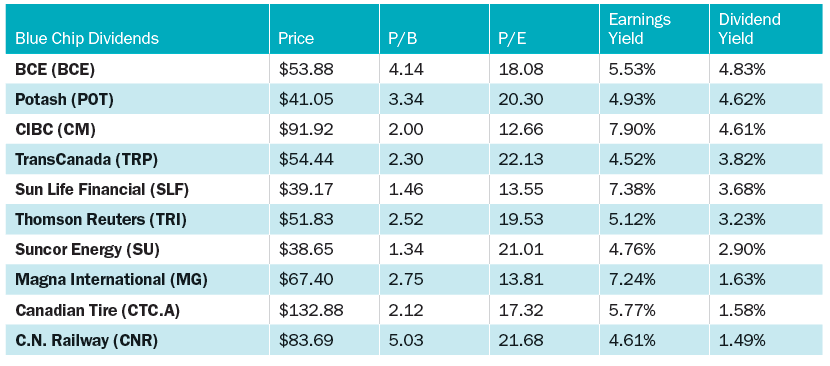
That said, the current list of Dogs is heavily concentrated in financials and telecoms and I’d personally want to begin with a little more diversification by industry. To help start you off, the table “Ten stocks to start out with” on page 41 shows a selection of high-yielding stocks in the S&P/TSX 60 that come from different industry groups.
There are pros and cons for both stock picking and index investing, but no matter which you choose, it’s best to stick with simple and easy to understand low-fee methods. With a bit of luck, they’ll fund more than a few trips to your local coffee bar.
Ten stocks to start out with

No comments:
Post a Comment